Libsyn Player

Sunday, October 28, 2018

082 - The Leader of the Muses


In this episode, we discuss the myths, iconography, and cultic worship of Apollo, the god of music, poetry, prophecy, truth, healing, medicine, plague, light, and knowledge, who served as a kind of symbol for young Greek boys to emulate

Primary Sources:


Sunday, October 14, 2018

**Special Guest Episode on Classics and Race/Ethnicity w/Rebecca Futo Kennedy**


In today's special guest episode, I am joined by Dr Rebecca Futo Kennedy, Associate Professor of Classical Studies at Denison University in Granville, OH. Her primary teaching and research areas include the history of Archaic and Classical Greece, race and ethnicity in the ancient Mediterranean, and women, gender, and sexuality in antiquity. She is the author and editor of a number of books and articles, including Immigrant Women in AthensThe Routledge Handbook of Identity and the Environment in the Classical and Medieval WorldsRace and Ethnicity in the Classical World: An Anthology of Sources, and, most recently, Brill's Companion to the Reception of Aeschylus. She is currently working on the reception of ancient theories of race and ethnicity in the early Smithsonian, on the way inheritance and property laws reflect Athenian understanding of ethnic identity, and on ancient theories on race and ethnicity and their contemporary complications.

In the first hour of the conversation, Dr. Kennedy and I have a lively discussion about race, ethnicity, immigration, and multiculturalism in the ancient Mediterranean. Along the way we point out many of the misconceptions that there are on these topics, and in the second hour we discuss how these misconceptions were shaped by early modern European and American political thought. In doing so, we discuss a course that Dr. Kennedy is currently teaching called Ancient Art, Modern Politics, which examines art and architecture in ancient Greece and Rome and the history of its appropriation by modern fascist, nationalist, and white supremacist movements. Along the way we talk about the theories of German art historian Johann Winckelmann, particularly his fetishization of white marble statues, the use of Classical forms at World’s Fairs to explicitly yoke antiquity to support white supremacy, Mussolini’s reconstruction of Rome and his use of the ancient Roman past in support of Fascist ideology, Hitler’s fascination with ancient Greece and his white European-centric reconstruction of history that has been erroneously perpetuated (which leads into a digression about the impact that Classicists can have on the narrative by perpetuating racist and false versions of Greek history contrary to the evidence), and finally the cooption of classical sculpture in modern white supremacist groups.


Dr. Rebecca Futo Kennedy
Associate Professor of Classical Studies at Denison University


Rebecca Futo Kennedy.jpg


Video/White Supremacy and Classical Athens: A Turning Point?
In October 2021, the Lepage Center explored the critical issues of white supremacy. Are we witnessing a "turning point" in how white supremacists use ancient Greek societies as historical models? In this roundtable, Dr. Curtis Dozier (Vassar College), Dr. Rebecca Futo Kennedy (Denison University), and Dr. Jackie Murray (University of Kentucky) discussed how white supremacist groups fetishize classical Athens and the problems behind these forms of appropriation. Moderated by Dr. Eliza Gettel (Villanova University).


Related Articles

Related Podcast Episodes
"'Us' & 'Them' in the Ancient & Anglo-Saxon Worlds" @ The Endless Knot podcast by Mark Sundaram and Aven McMaster
"Race and Racism in Ancient and Medieval Studies, Part 1: The Problem" @ The Endless Knot podcast by Mark Sundaram and Aven McMaster
"Race and Racism in Ancient and Medieval Studies, Part 2: The Response" @ The Endless Knot podcast by Mark Sundaram and Aven McMaster


Sunday, October 7, 2018

**Special Guest Episode on Classics and Misogyny w/Donna Zuckerberg**


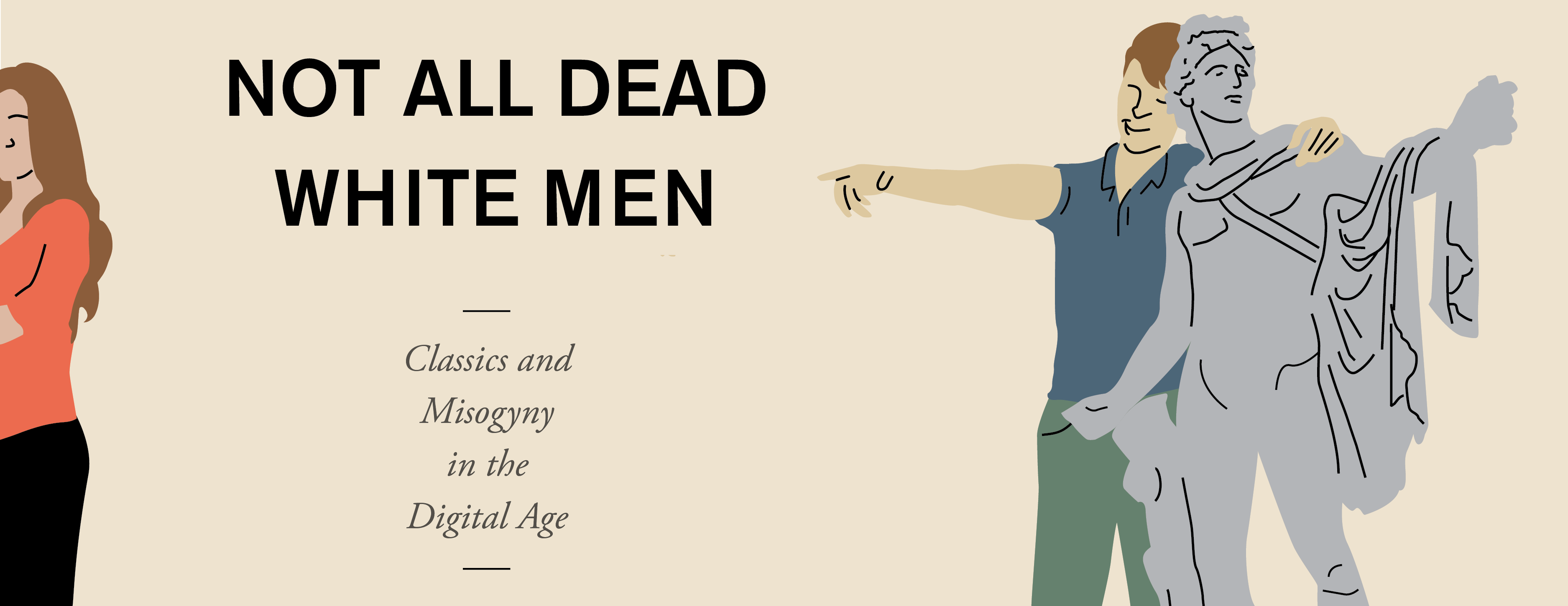
In today's special guest episode, Dr Donna Zuckerberg and I talk about her role as Editor-in-Chief of Eidolon, which is an online journal for scholarly writing about Classics that isn’t formal scholarship. This leads us into a discussion about the importance of public-facing historical scholarship. More importantly, though, we discuss her new book titled “Not All Dead White Men: Classics and Misogyny in the Digital Age", which is a study of the reception of Classics in Red Pill communities.


"A virulent strain of antifeminism is thriving online that treats women’s empowerment as a mortal threat to men and to the integrity of Western civilization. Its proponents cite ancient Greek and Latin texts to support their claims―arguing that they articulate a model of masculinity that sustained generations but is now under siege. Donna Zuckerberg dives deep into the virtual communities of the far right, where men lament their loss of power and privilege and strategize about how to reclaim them. She finds, mixed in with weightlifting tips and misogynistic vitriol, the words of the Stoics deployed to support an ideal vision of masculine life. On other sites, pickup artists quote Ovid’s Ars Amatoria to justify ignoring women’s boundaries. By appropriating the Classics, these men lend a veneer of intellectual authority and ancient wisdom to their project of patriarchal white supremacy. In defense or retaliation, feminists have also taken up the Classics online, to counter the sanctioning of violence against women. Not All Dead White Men reveals that some of the most controversial and consequential debates about the legacy of the ancients are raging not in universities but online."

Dr. Donna Zuckerberg


Sunday, September 30, 2018

081 - Orphism, Omens, and Oracles


In this episode, we discuss the myths, iconography, and cultic worship of Orpheus and his Mysteries; the Orphic Hymns and the Orphic Theogony; the Orphic Hymn to Melinoe and her connection to the Mysteries, Hekate, and Hermes Psychopompos; the roles of omens, divination, and itinerant seers (including the mythic figures of Teiresias, Mopsos, and Kalchas, as well as historical figures like Lampon); and the roles of oracles (including the myths and cultic worship of Apollo regarding Delphi, Python, the Pythia, the Sibyl, and Daphne, as well as the archaeological evidence, rituals, and importance of the oracles at Delphi, those in Boiotia, and those in Ionia (Didyma and Klaros)

Primary Sources:


Sunday, September 16, 2018

**Special Guest Episode on Roman Slavery and Gladiators w/Fiona Radford**


In this special guest episode, I am joined by Dr Fiona Radford, expert on Rome in Film and Spartacus, to discuss slavery in the ancient Roman Republic and Empire and compare/contrast it with ancient Greece (plus lots on gladiators and Spartacus!)
***Show Notes from the Partial Historians***


Dr Fiona Radford
Co-Host of the Partial Historians Podcast
Website: https://partialhistorians.com
Facebook: https://www.facebook.com/thepartialhistorians/
Twitter: https://twitter.com/p_historians and https://twitter.com/FionaRadford1
TED-Ed Video: From slave to rebel gladiator: The life of Spartacus - Fiona Radford


Scholar: Fiona Radford - Women Also Know History


Tuesday, September 4, 2018

080 - Hekate and Magic


In this episode, we discuss the myths, iconography, and cultic worship of Hekate, the goddess associated with magic, sorcery, witchcraft, knowledge of herbs and poisonous plants, crossroads, entrance-ways, ghosts, and necromancy; including her connections and/or syncretizations with Iphigenia, Artemis, Selene, the Erinyes (also known as the Furies), the Keres, the Semnai Theai, Empousa, Lamia, Kirke, and Medeia; and the "monstrous craft" of magikos in ancient Greece, including curse tablets, binding spells, love spells, potions, and amulets


Primary Sources:
Text/The Greek Magical Papyri


Thursday, August 23, 2018

079 - Old Age, Death, and Burial


In this episode, we discuss what life was like for the elderly in ancient Greece, the liminal stage between life and death, the rituals and importance of the funeral and burial, the archaeology of the Kerameikos in Athens and its significance in our understanding of Greek funerary practices, the importance of the demosion sema and epitaphios logos in Athenian democracy, and the evolution of Greek funerary monuments from the archaic into the Hellenistic period


Thursday, August 9, 2018

078 - Healing, Medicine, and Disease


In this episode, we discuss healing and medicine in the ancient Greek world by looking at Asklepios, his healing sanctuaries known as Asklepieia, and the earliest physicians, including Hippokrates of Kos, the Hippokratic School of Medicine, and the Hippokratic Corpus; and bacterial/viral diseases, mental diseases, and disabilities


Monday, July 16, 2018

077 - From Childbirth to Adolescence


In this episode, we discuss what it was was like in ancient Athens for a young girl or boy from birth to adolescence, by looking at childbirth, childhood, the various rites of passages that they must surpass on the way to becoming teenagers, the paideia education system (both Old and New) and finally the training young boys undertook in order to be accepted as a hoplite citizen warrior


Monday, June 11, 2018

076 - The Goddess of the Young


In this episode, we discuss the myths, iconography, and cultic worship of Artemis, the virgin goddess of the hunt, the wilderness, the moon, and the protector of the young

Primary Sources:


Monday, June 4, 2018

**Special Guest Episode on Roman Women and Religion w/Peta Greenfield**


In this special guest episode, I am joined by Dr Peta Greenfield to compare/contrast certain aspects of Women and Religion between the ancient Greeks and Romans (highlights include Bona Dea, the Thesmophoria, the Vestal Virgins, Hestia and the hearth, women’s role in ritual weaving, the role of women in service to gods rather than goddesses, household religion, Bacchanalia, orgies, sex workers, and much more!)
***Show Notes from the Partial Historians***


Dr Peta Greenfield
Co-Host of the Partial Historians Podcast
Website: https://partialhistorians.com
Facebook: https://www.facebook.com/thepartialhistorians/
Twitter: https://twitter.com/p_historians and https://twitter.com/peta_greenfield
TED-Ed Video: Who were the Vestal Virgins, and what was their job? - Peta Greenfield


600+ "Peťa" profiles | LinkedIn

Tuesday, May 22, 2018

075 - Pregnancy, Abortion, and Divorce


In this episode, we discuss the medical and philosophical writings on women’s bodies, particularly the Hippokratic Corpus and Aristotle, relating to the topics of menstruation, pregnancy, and the “wandering womb”; the various methods and techniques for conception, contraception, abortion, and exposure; the legal procedure for divorces (usually due to childlessness and adultery); and the ways in which adulterers were punished in ancient Greece


Monday, April 30, 2018

074 - Marriage and Domesticity


In this episode, we discuss the legal status of women in Ancient Greece (including the dowry and the epikleros), the betrothal and marriage rituals, and the ideal of separation and seclusion for women (the evidence for and against it)


Monday, April 2, 2018

073 - The Oikos and Private Life


In this episode, we discuss the basic designs of ancient Greek homes and what type of furniture, decoration, lighting, and so forth might have been found in them; the physical and idealistic separation between the gynakeion (women's quarters) and the andron (men's quarters); the pitfalls to ancient Athens as an urban city (such as the street-side defecation), as well as the benefits (such as the gymnasia); the religious sphere of the oikos, particularly the role that Hestia's veneration played in it; and the different type of clothing, jewelry, and hairstyles one might have seen on an ancient Athenian man or woman

Primary Sources:


Sunday, March 25, 2018

072 - The Wrathful Queen


In this episode, we discuss the myths, iconography, and cultic worship of Hera, the queen of the heavens and wife of Zeus, and the guardian of women, marriage, childbirth, and the family unit


Monday, March 12, 2018

**Special Guest Episode on Roman Sexuality w/Aven McMaster**


In this special guest episode, I am joined by Dr Aven McMaster to discuss love, sex, and prostitution from the Roman perspective and compare/contrast it with ancient Greece

Dr Aven McMaster
Assistant Professor of Ancient Studies at Thorneloe University at Laurentian
Co-Host of the Endless Knot Podcast
Website: http://www.alliterative.net
Facebook: https://www.facebook.com/alliterativeendlessknot/
Twitter: https://twitter.com/AvenSarah and https://twitter.com/AvenMcMaster


Aven McMaster | Thorneloe University at the University of Laurentian -  Academia.edu


Monday, March 5, 2018

071 - Love, Sex, and Prostitution


In this episode, we discuss Greek love and sexuality by examining the formal social institution known as pederasty; the various philosophical theories of love as described by Plato (through various speakers) in his treatise, the Symposion; the various methods in which Athenian males (and non-citizen women) were able to have sex; the depiction of nudity and genitalia in art and masturbation; the various types of female and male prostitutes; pictorial and medical evidence for the daily life of prostitutes and philosophical and comedic representation of prostitution; and the lives of several famous hetairai (Rhodopis, Thargelia, Aspasia, Phryne, and Neaira)

Monday, February 19, 2018

070 - The Goddess of Seduction


In this episode, we discuss the myths, iconography, and cultic worship of Aphrodite, the goddess of beauty, love, sexual pleasure, and procreation

Primary Sources:
Text/Homeric Hymn to Aphrodite


Wednesday, February 7, 2018

069 - Slaves and Foreigners


In this episode, we discuss the notion of the barbaroi in Greek culture; the origins and philosophical theories for slavery; and the legal status and type of roles (and importance) that slaves and metics (foreign residents) had in the Athenian economy


Tuesday, January 23, 2018

068 - Travel, Trade, and Work


In this episode, we discuss the various ways in which the ancient Greeks traveled, whether it was via land or sea; the physical layout of the port of Peiraieus and the commercial activity that took place there; the mining district of Thorikos and how silver was mined for coinage and how coins were struck; farming techniques and how produce and goods were sold in the Agora; the various types of manufacturing workshops at Athens and how they operated; and the disdain that the elites held for “work” and the merchant and manufacturing classes


Tuesday, January 16, 2018

067 - Hephaistos and Hermes


In this episode, we discuss the myths, iconography, and cultic worship of Hephaistos (the god of fire, metallurgy, and craftsmen) and Hermes (the messenger god of cunning and deceit and the protector of thieves, travelers, merchants, athletes, and boundaries)


Primary Sources:
Text/Homeric Hymn to Hermes


Tuesday, December 19, 2017

066 - The Athenian Agora


In this episode, we discuss the construction, history, and significance of the Athenian Agora (the civic, religious, legal, and commercial nerve center for Athenian democracy), including a walking tour of what a visitor then and now would see


Tuesday, December 12, 2017

065 - The Athenian Akropolis


In this episode, we discuss the construction, the history, and the significance of the buildings on the Athenian Akropolis (including the Parthenon, the Propylaia, the Temple of Athena Nike, the Erechtheion, and a few others); together, these buildings mark the high point of the glorification of Athens, a confident assertion of its cultural leadership of Greece, a bold endorsement of its self-image, and a dazzling instrument of political propaganda, with the result that many later would consider the Athenian Akropolis to be the symbol of the legacy and the glories of Classical Greece


Monday, December 4, 2017

064 - The Protectress of Athens


In this episode, we discuss the myths, iconography, and cultic worship of Athena, the goddess of wisdom, craftsmanship, and strategic warfare who served as a kind of symbol for the city of Athens and civilization in general


Monday, November 27, 2017

063 - The Lord of the Sea


In this episode, we discuss the myths, iconography, and cultic worship of Poseidon, the violent and unpredictable god who ruled over the sea


Monday, November 20, 2017

062 - Agricultural Festivals


In this episode, we discuss the Attic calendar year with a focus on various agricultural festivals and ceremonies; starting in the fall at the time of sowing we work our way around the year, month-by-month, until it is time to sow once again; particular attention is given to the Thesmophoria and the Eleusinian Mysteries, including a walking tour of what a visitor then and now would see at the site of Eleusis, but a dozen or so other festivals are described, including the Pyanepsia, the Oschophoria, the Chalkeia, the Proerosia, the Apatouria, the Haloa, the Thargelia, the Skira, the Kronia, the Herakleia, and the Boedromia (excluded are the Dionysian festivals—the Rural Dionysia, the Lenaia, the City Dionysia, and the Anthesteria)

Attic Calendar:

Pyanepsion (late October / early November)

Maimakterion (late November / early December)

Poseideion (late December /  early January)

Gamelion (late January / early February)

Anthesterion (late February / early March)

Elaphebolion (late March / early April)

Mounichion (late April / early May)

Thargelion (late May / early June)

Skirophorion (late June / early July)

Hekatombaion (late July / early August)

Metageitnion (late August  / early September)

Boedromion (late September / early October)


Sunday, November 12, 2017

061 - The "Two Goddesses"


In this episode, we discuss the primordial goddess Gaia (the personification of Mother Earth) and her relationship with Demeter, the goddess of agriculture; the myths and iconography of the "two goddesses," Demeter and her daughter Persephone / Kore (including the daughter's abduction by Hades); Persephone's dual role as Queen of the Underworld and an agriculture goddess, like her mother; and the various ways in which these two were worshipped together, particularly in the Peloponnesos and Magna Graecia (but not including their Attic cults)


Primary Sources:


Wednesday, November 1, 2017

060 - Hades and the Underworld


In this episode, we discuss the mysterious, shadowy figure of Hades (Lord of the Underworld); the Greek perception of the afterlife and those who dwell in it; necromancy (the summoning of the dead to answer questions); where and how one can make a katabasis (decent) into the Underworld; and Homer's description of the abode of Hades in Book Eleven of the Odyssey and then comparing and contrasting that with the description found in Virgil's Aeneid Book Six, all while taking a tour of the Underworld, its major features, and its inhabitants


Primary Sources:


Friday, October 27, 2017

059 - Olympian Zeus


In this episode, we discuss the myths, iconography, and cultic worship of Zeus, the mighty patriarch who ruled over Mount Olympos; included are his Indo-European origins as the supreme sky god; his role as the god who maintains order and justice by presiding over normative civic, social, and family relationships; his connection with Themis (Divine Law), Nemesis (Revenge), and the three Moirai (the Fates); his worship as a rain-making, agricultural deity, both on mountain peaks (Attika and Krete) and the Underworld (symbolizing the regenerative life cycle); his worship in Arkadia and its relationship to werewolf transformation and human sacrifice; his oracles at Dodona and Siwa (where he was syncretized with Libyan god Ammon); his Panhellenic sanctuary at Olympia; his connection with Nike (Victory) and his worship as a savior or bringer of freedom against foreign foes (Persia and Carthage); and the "philosophical Zeus" that arose as some questioned polytheistic religions during the Hellenistic Period


Sunday, October 15, 2017

058 - Classical Temples


In this episode, we discuss the innovations during the 5th century BC in the realm of temple building (outside of Attika, that is); included are the Temple of Aphaia at Aigina, the Temple of Zeus at Olympia, the Temple of Hera II at Poseidonia (Paestum), the Temple of Victory at Himera, the Temple of Apollo at Syracuse, the Valley of the Temples at Akragas (Agrigento), the Temple of Hera at Selinous, the unfinished temple at Segesta, and the Temple of Apollo at Bassai


Wednesday, October 11, 2017

057 - Classical Paintings


In this episode, we discuss the innovations during the 5th century BC in the realm of painting on pottery, walls, and wooden panels; included are some of the most famous vase paintings of the Kleoprades Painter, the Berlin Painter, Onesimos, the Brygos Painter, the Pistoxenos Painter, Sotades, the Niobid Painter, the Achilles Painter, the Penthesilea Painter, the Pisticci Painter, and the Meidias Painter; the wall paintings of Polygnotos, Mikon, Timarete, Parrhasios, Zeuxis, Apollodoros, and the Tomb of the Diver at Poseidonia (Paestum); and the Pitsa Panels




Sunday, October 1, 2017

056 - Classical Sculptures


In this episode, we discuss the innovations during the 5th century BC in the realm of free-standing statuary in the round, stelai, and architectural relief; included are the Kritios Boy and the Angelitos' Athena from the "Persian debris", the Tyrannicides by Antenor, the Charioteer of Delphi, the Artemision Zeus/Poseidon, the Riace Warriors, the Statue of Zeus Carrying Ganymedes, the Mourning Athena, the Exaltation of the Flowers, the Enthroned Goddess, the Charioteer of Motya, the Relief of Hades and Persephone Enthroned, the Relief of Aphrodite and Hermes in a Chariot Drawn by Eros and Psyche, the Diskobolos (Discus Thrower) of Myron, the Doryphoros (Spear-Bearer) and Diadoumenos (Youth Tying a Headband) of Polykleitos, the Helmeted Athena, the Wound Amazon, the Cat Stele, and the Stele of Hegeso


Saturday, September 16, 2017

055 - The Dionysian Mysteries


In this episode, we discuss the Phrygian goddess Kybele; her cult's transportation from Asia Minor to Greece in the 6th century BC; her assimilation with various aspects of the cults of Gaia, Rhea, and Demeter as the Great Mother and as a civic protector (particularly in Athens); her cultic rites and influence on Dionysos (Bakkhos), particularly music, wine, and an ecstatic following; the myths of two other Phrygian deities, Agdistis and Attis; some of the myths and the iconography of Dionysos and his companions (Seilenos, Pan, the Satyrs, and the Mainades); the historicity and major themes of Euripides' The Bakkhai ("The Followers of Bakkhos"); and the cultic elements of Dionysiac worship (particularly in Delphi, Boiotia, and the Peloponnesos)


Primary Sources:


Monday, August 28, 2017

053 - Euripides at War


In this episode, we discuss the historical context and major themes of Euripides' surviving plays that he produced against the backdrop of the Peloponnesian War, which include Children of Herakles, Andromache, HekabeSuppliants, Elektra, Madness of Herakles, Trojan Women, Iphigenia in Tauris, Ion, Helene, Phoenician Women, Orestes, and Iphigenia at Aulis (excluding Bakkhai)


480 BC - Euripides is born
455 BC - Euripides competes in his first Dionysia (unknown work)
ca. 442-441 BC - Euripides wins his first victory at the Dionysia (unknown work); Sophocles stages trilogy with Antigone and Ajax (his oldest surviving plays)
438 BC - Euripides stages a tetralogy with Alcestis (mixed satyr/drama) as the fourth play 
431 BC - Aeschylus' son, Euphorion, wins first prize at the Dionysia (unknown work); Sophocles places second (unknown work); Euripides places third (trilogy with Medea)
430 BC - Euripides stages trilogy with The Children of Herakles
428 BC - Euripides stages trilogy with Hippolytus and takes first place; Sophocles' son, Iophon, places second (unknown work); Ion places third (unknown work)
ca. 428-425 BCEuripides stages trilogy with Andromache
424 BCEuripides stages trilogy with Hecuba
423 BC - Euripides stages trilogy with The Suppliants
ca. mid-410s BCEuripides stages trilogy with Electra
416 BCEuripides stages trilogy with The Madness of Herakles
415 BCEuripides stages trilogy with The Trojan Women and takes second place; defeated by Xenokles (unknown work); third place is unknown
ca. 414-412 BC - Euripides stages trilogies with Iphigenia in Tauris and Ion
412 BC - Euripides stages trilogy with Helen
412-408 BC - Euripides stages trilogy with The Phoenician Women
408 BC - Euripides stages trilogy with Orestes
ca. 408-406 BC - Euripides migrates to the court of Archelaos, King of Macedon, where he composed a play in his honor, titled Archelaos (lost work)
406 BC - Euripides dies while in Macedon
405 BCEuripides' son or nephew posthumously wins first prize at the Dionysia by staging trilogy with his last two completed surviving plays, Iphigenia in Aulis and The Bacchae; the third play, Alcmeon in Corinth, survives only in fragments 


Primary Sources:
Text/Euripides' The Children of Herakles
Text/Euripides' Andromache
Text/Euripides' Hecuba
Text/Euripides' The Suppliants
Text/Euripides' Electra
Text/Euripides' The Madness of Herakles
Text/Euripides' The Trojan Women
Text/Euripides' Iphigenia in Tauris
Text/Euripides' Ion
Text/Euripides' Helen
Text/Euripides' The Phoenician Women
Text/Euripides' Orestes
Text/Euripides' Iphigenia at Aulis