In this episode, part four of four on a series on Greek philosophy, mathematics, and science in the 5th century BC, we describe the earliest astronomical observations and calculations in ancient Mesopotamia and Egypt and their influence on ancient Greek astronomy; the various planets and star constellations found in Greek literature, as well as the origins of the Zodiac; the earliest Greek astronomical speculations of the universe found in Greek mythology (Homer and Hesiod) and in Pre-Socratic philosophy; the Pythagorean model of the universe put forward by Philolaus; and the astronomical calculations made by Oenopides and Meton
A podcast series covering Ancient Greek & Hellenistic political, social, and cultural history from prehistory to the Roman conquest
Libsyn Player
Sunday, December 23, 2018
086 - Early Astronomy
In this episode, part four of four on a series on Greek philosophy, mathematics, and science in the 5th century BC, we describe the earliest astronomical observations and calculations in ancient Mesopotamia and Egypt and their influence on ancient Greek astronomy; the various planets and star constellations found in Greek literature, as well as the origins of the Zodiac; the earliest Greek astronomical speculations of the universe found in Greek mythology (Homer and Hesiod) and in Pre-Socratic philosophy; the Pythagorean model of the universe put forward by Philolaus; and the astronomical calculations made by Oenopides and Meton
Sunday, December 9, 2018
085 - Mathematics and Early Pythagoreans
In this episode, part three of four on a series on Greek philosophy, mathematics, and science in the 5th century BC, we describe the lives, influences, and various theories and discoveries made by Greece's earliest mathematicians, including Thales, Pythagoras, Hippasus and the early Pythagoreans, Oenopides, Hippocrates, Antiphon, Bryson, Democritus, and Theodoros
Monday, November 26, 2018
084 - Pluralists and Other Physiologoi
In this episode, part two of four on a series on Greek philosophy, mathematics, and science in the 5th century BC, we describe the lives, influences, and various theories put forth by the so-called Pluralist School (Anaxagoras, Empedokles, and Archelaos), as well as various other Pre-Socratic physiologoi (aka natural philosophers) not associated with a particular school, such as Hippon and Diogenes of Apollonia, and the philosopher/medical theorist Alkmeon
Sunday, November 11, 2018
083 - Eleatics and Atomists
In this episode, part one of four on a series on Greek philosophy, mathematics, and science in the 5th century BC, we describe the lives, influences, and various theories put forth by the Eleatic School (Parmenides, Zeno, and Melissos) and the so-called Atomists (Leukippos and Demokritos)
Sunday, October 28, 2018
082 - The Leader of the Muses
In this episode, we discuss the myths, iconography, and cultic worship of Apollo, the god of music, poetry, prophecy, truth, healing, medicine, plague, light, and knowledge, who served as a kind of symbol for young Greek boys to emulate
Sunday, October 14, 2018
**Special Guest Episode on Classics and Race/Ethnicity w/Rebecca Futo Kennedy**
Associate Professor of Classical Studies at Denison University
In October 2021, the Lepage Center explored the critical issues of white supremacy. Are we witnessing a "turning point" in how white supremacists use ancient Greek societies as historical models? In this roundtable, Dr. Curtis Dozier (Vassar College), Dr. Rebecca Futo Kennedy (Denison University), and Dr. Jackie Murray (University of Kentucky) discussed how white supremacist groups fetishize classical Athens and the problems behind these forms of appropriation. Moderated by Dr. Eliza Gettel (Villanova University).
"Race and Racism in Ancient and Medieval Studies, Part 1: The Problem" @ The Endless Knot podcast by Mark Sundaram and Aven McMaster
"Race and Racism in Ancient and Medieval Studies, Part 2: The Response" @ The Endless Knot podcast by Mark Sundaram and Aven McMaster
Sunday, October 7, 2018
**Special Guest Episode on Classics and Misogyny w/Donna Zuckerberg**
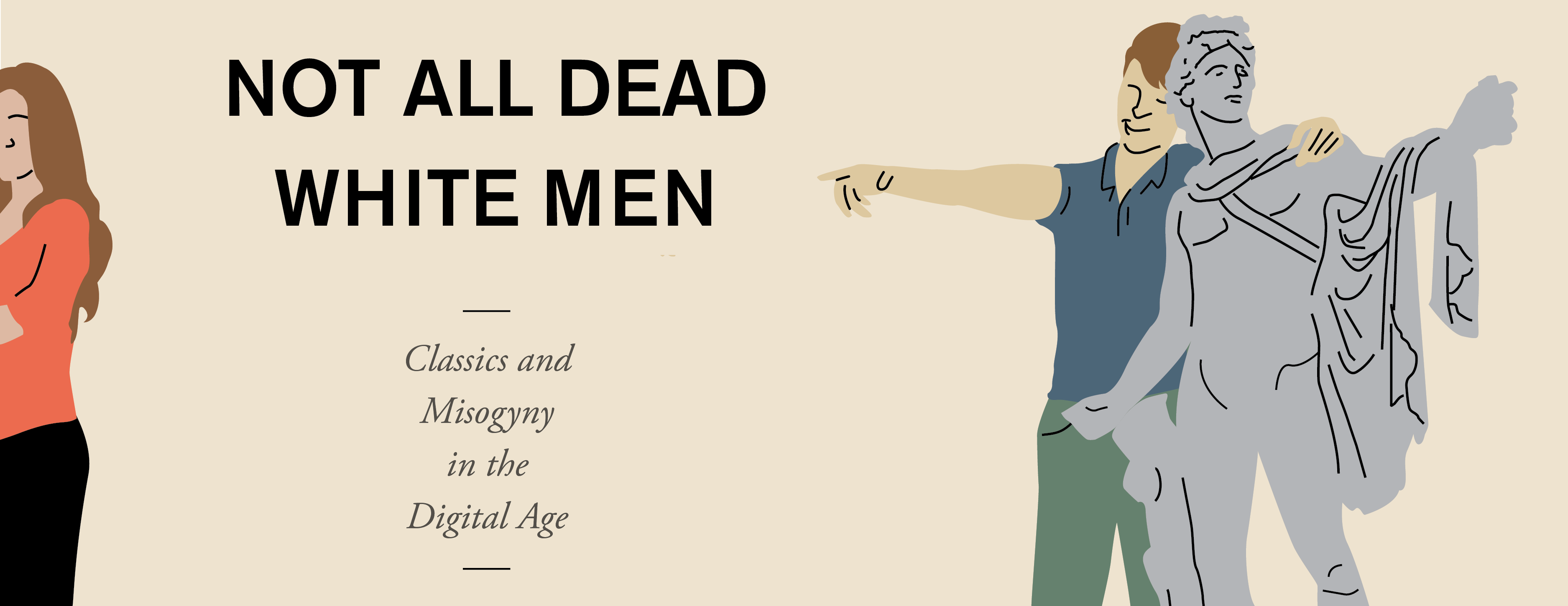
In today's special guest episode, Dr Donna Zuckerberg and I talk about her role as Editor-in-Chief of Eidolon, which is an online journal for scholarly writing about Classics that isn’t formal scholarship. This leads us into a discussion about the importance of public-facing historical scholarship. More importantly, though, we discuss her new book titled “Not All Dead White Men: Classics and Misogyny in the Digital Age", which is a study of the reception of Classics in Red Pill communities.
Facebook: https://www.facebook.com/eidolonjournal/
Sunday, September 30, 2018
081 - Orphism, Omens, and Oracles
In this episode, we discuss the myths, iconography, and cultic worship of Orpheus and his Mysteries; the Orphic Hymns and the Orphic Theogony; the Orphic Hymn to Melinoe and her connection to the Mysteries, Hekate, and Hermes Psychopompos; the roles of omens, divination, and itinerant seers (including the mythic figures of Teiresias, Mopsos, and Kalchas, as well as historical figures like Lampon); and the roles of oracles (including the myths and cultic worship of Apollo regarding Delphi, Python, the Pythia, the Sibyl, and Daphne, as well as the archaeological evidence, rituals, and importance of the oracles at Delphi, those in Boiotia, and those in Ionia (Didyma and Klaros)
Sunday, September 16, 2018
**Special Guest Episode on Roman Slavery and Gladiators w/Fiona Radford**
In this special guest episode, I am joined by Dr Fiona Radford, expert on Rome in Film and Spartacus, to discuss slavery in the ancient Roman Republic and Empire and compare/contrast it with ancient Greece (plus lots on gladiators and Spartacus!)
***Show Notes from the Partial Historians***
Dr Fiona Radford
Co-Host of the Partial Historians Podcast
Website: https://partialhistorians.com
Facebook: https://www.facebook.com/thepartialhistorians/
Twitter: https://twitter.com/p_historians and https://twitter.com/FionaRadford1
TED-Ed Video: From slave to rebel gladiator: The life of Spartacus - Fiona Radford

Tuesday, September 4, 2018
080 - Hekate and Magic
In this episode, we discuss the myths, iconography, and cultic worship of Hekate, the goddess associated with magic, sorcery, witchcraft, knowledge of herbs and poisonous plants, crossroads, entrance-ways, ghosts, and necromancy; including her connections and/or syncretizations with Iphigenia, Artemis, Selene, the Erinyes (also known as the Furies), the Keres, the Semnai Theai, Empousa, Lamia, Kirke, and Medeia; and the "monstrous craft" of magikos in ancient Greece, including curse tablets, binding spells, love spells, potions, and amulets
Primary Sources:
Text/The Greek Magical Papyri
Thursday, August 23, 2018
079 - Old Age, Death, and Burial
In this episode, we discuss what life was like for the elderly in ancient Greece, the liminal stage between life and death, the rituals and importance of the funeral and burial, the archaeology of the Kerameikos in Athens and its significance in our understanding of Greek funerary practices, the importance of the demosion sema and epitaphios logos in Athenian democracy, and the evolution of Greek funerary monuments from the archaic into the Hellenistic period
Thursday, August 9, 2018
078 - Healing, Medicine, and Disease
In this episode, we discuss healing and medicine in the ancient Greek world by looking at Asklepios, his healing sanctuaries known as Asklepieia, and the earliest physicians, including Hippokrates of Kos, the Hippokratic School of Medicine, and the Hippokratic Corpus; and bacterial/viral diseases, mental diseases, and disabilities
Monday, July 16, 2018
077 - From Childbirth to Adolescence
In this episode, we discuss what it was was like in ancient Athens for a young girl or boy from birth to adolescence, by looking at childbirth, childhood, the various rites of passages that they must surpass on the way to becoming teenagers, the paideia education system (both Old and New) and finally the training young boys undertook in order to be accepted as a hoplite citizen warrior
Monday, June 11, 2018
076 - The Goddess of the Young
In this episode, we discuss the myths, iconography, and cultic worship of Artemis, the virgin goddess of the hunt, the wilderness, the moon, and the protector of the young
Monday, June 4, 2018
**Special Guest Episode on Roman Women and Religion w/Peta Greenfield**
In this special guest episode, I am joined by Dr Peta Greenfield to compare/contrast certain aspects of Women and Religion between the ancient Greeks and Romans (highlights include Bona Dea, the Thesmophoria, the Vestal Virgins, Hestia and the hearth, women’s role in ritual weaving, the role of women in service to gods rather than goddesses, household religion, Bacchanalia, orgies, sex workers, and much more!)
***Show Notes from the Partial Historians***
Dr Peta Greenfield
Co-Host of the Partial Historians Podcast
Website: https://partialhistorians.com
Facebook: https://www.facebook.com/thepartialhistorians/
Twitter: https://twitter.com/p_historians and https://twitter.com/peta_greenfield
TED-Ed Video: Who were the Vestal Virgins, and what was their job? - Peta Greenfield
Tuesday, May 22, 2018
075 - Pregnancy, Abortion, and Divorce
In this episode, we discuss the medical and philosophical writings on women’s bodies, particularly the Hippokratic Corpus and Aristotle, relating to the topics of menstruation, pregnancy, and the “wandering womb”; the various methods and techniques for conception, contraception, abortion, and exposure; the legal procedure for divorces (usually due to childlessness and adultery); and the ways in which adulterers were punished in ancient Greece
Monday, April 30, 2018
074 - Marriage and Domesticity
In this episode, we discuss the legal status of women in Ancient Greece (including the dowry and the epikleros), the betrothal and marriage rituals, and the ideal of separation and seclusion for women (the evidence for and against it)
Monday, April 2, 2018
073 - The Oikos and Private Life
In this episode, we discuss the basic designs of ancient Greek homes and what type of furniture, decoration, lighting, and so forth might have been found in them; the physical and idealistic separation between the gynakeion (women's quarters) and the andron (men's quarters); the pitfalls to ancient Athens as an urban city (such as the street-side defecation), as well as the benefits (such as the gymnasia); the religious sphere of the oikos, particularly the role that Hestia's veneration played in it; and the different type of clothing, jewelry, and hairstyles one might have seen on an ancient Athenian man or woman
Sunday, March 25, 2018
072 - The Wrathful Queen
In this episode, we discuss the myths, iconography, and cultic worship of Hera, the queen of the heavens and wife of Zeus, and the guardian of women, marriage, childbirth, and the family unit
Monday, March 12, 2018
**Special Guest Episode on Roman Sexuality w/Aven McMaster**
Dr Aven McMaster
Assistant Professor of Ancient Studies at Thorneloe University at Laurentian
Co-Host of the Endless Knot Podcast
Website: http://www.alliterative.net
Facebook: https://www.facebook.com/alliterativeendlessknot/
Twitter: https://twitter.com/AvenSarah and https://twitter.com/AvenMcMaster

Monday, March 5, 2018
071 - Love, Sex, and Prostitution
Monday, February 19, 2018
070 - The Goddess of Seduction
In this episode, we discuss the myths, iconography, and cultic worship of Aphrodite, the goddess of beauty, love, sexual pleasure, and procreation
Primary Sources:
Text/Homeric Hymn to Aphrodite
Wednesday, February 7, 2018
069 - Slaves and Foreigners
In this episode, we discuss the notion of the barbaroi in Greek culture; the origins and philosophical theories for slavery; and the legal status and type of roles (and importance) that slaves and metics (foreign residents) had in the Athenian economy
Tuesday, January 23, 2018
068 - Travel, Trade, and Work
In this episode, we discuss the various ways in which the ancient Greeks traveled, whether it was via land or sea; the physical layout of the port of Peiraieus and the commercial activity that took place there; the mining district of Thorikos and how silver was mined for coinage and how coins were struck; farming techniques and how produce and goods were sold in the Agora; the various types of manufacturing workshops at Athens and how they operated; and the disdain that the elites held for “work” and the merchant and manufacturing classes
Tuesday, January 16, 2018
067 - Hephaistos and Hermes
In this episode, we discuss the myths, iconography, and cultic worship of Hephaistos (the god of fire, metallurgy, and craftsmen) and Hermes (the messenger god of cunning and deceit and the protector of thieves, travelers, merchants, athletes, and boundaries)